

CAD Guides: STEP Measurement, Weight & File Formats
Practical notes on CAD formats, model properties, units and engineering handoffs. — Page 4
Engineering guides
37–43 of 43 results
No matches. Clear the search or choose another category.
 Troubleshooting
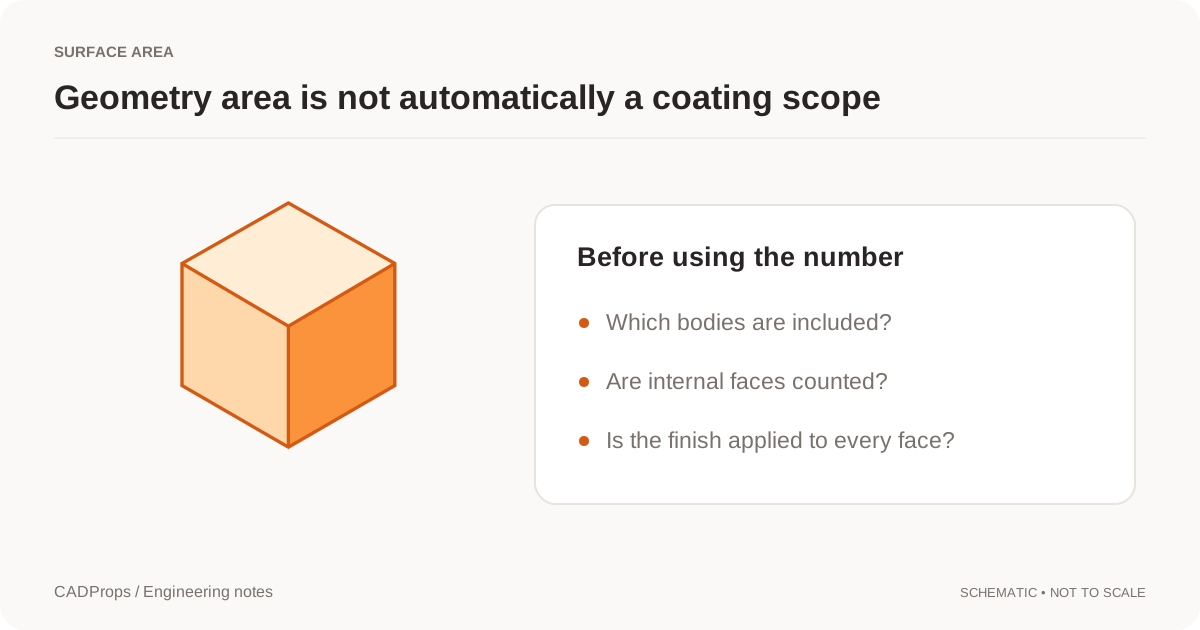
IGES Surfaces Not Solid? Check Volume and Open Shells
Understand an IGES surface import before stitching boundaries or assuming the reader failed to create a solid.
Take a closer look →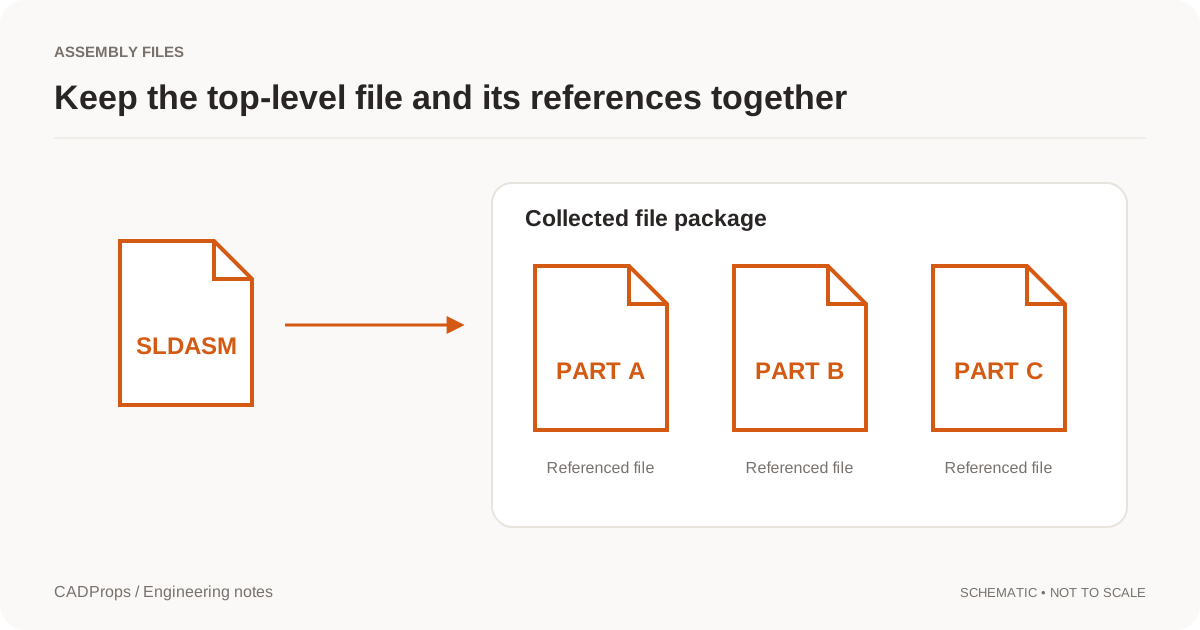 Troubleshooting
SLDASM Missing Parts? Fix SolidWorks Assembly References
Diagnose SolidWorks SLDASM assemblies with missing SLDPRT components, preserve folder structure, distinguish partial geometry from complete results, and rebuild the package.
Take a closer look →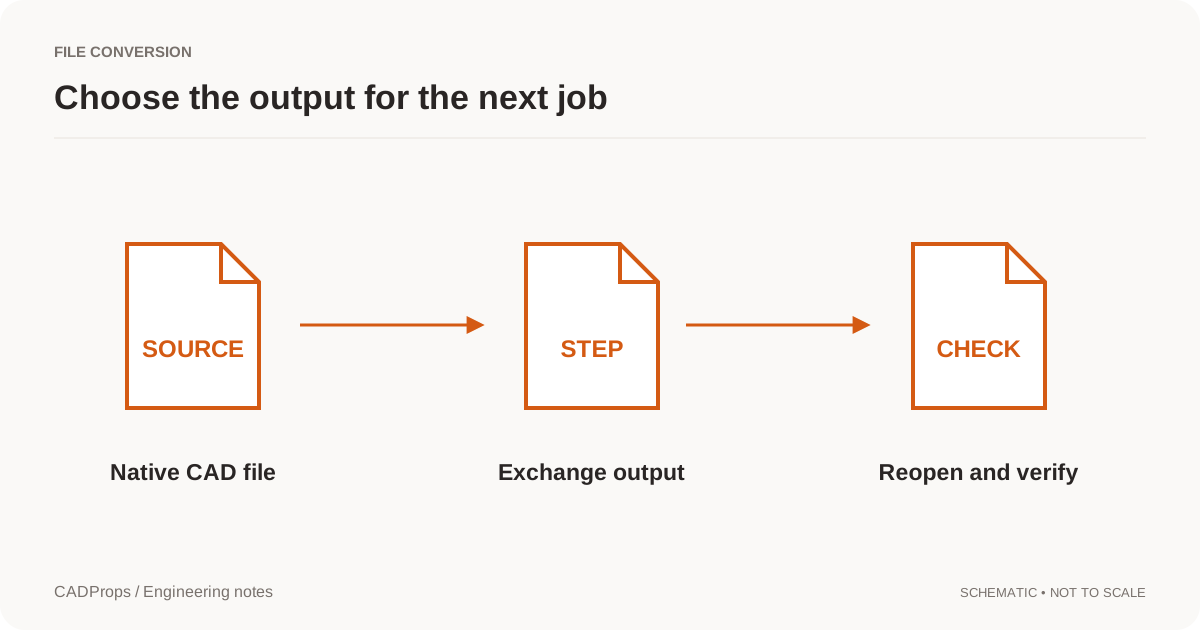 Troubleshooting
Reduce STEP File Size: Keep Required CAD Geometry
Distinguish archive compression, model simplification and display optimization before changing a CAD handoff.
Take a closer look →TroubleshootingSTEP File Volume Zero or Missing? Check Solid Geometry
Diagnose STEP files that show zero or unavailable volume by checking open shells, solid closure, selected scope, units, missing components and geometry-processing warnings.
Take a closer look →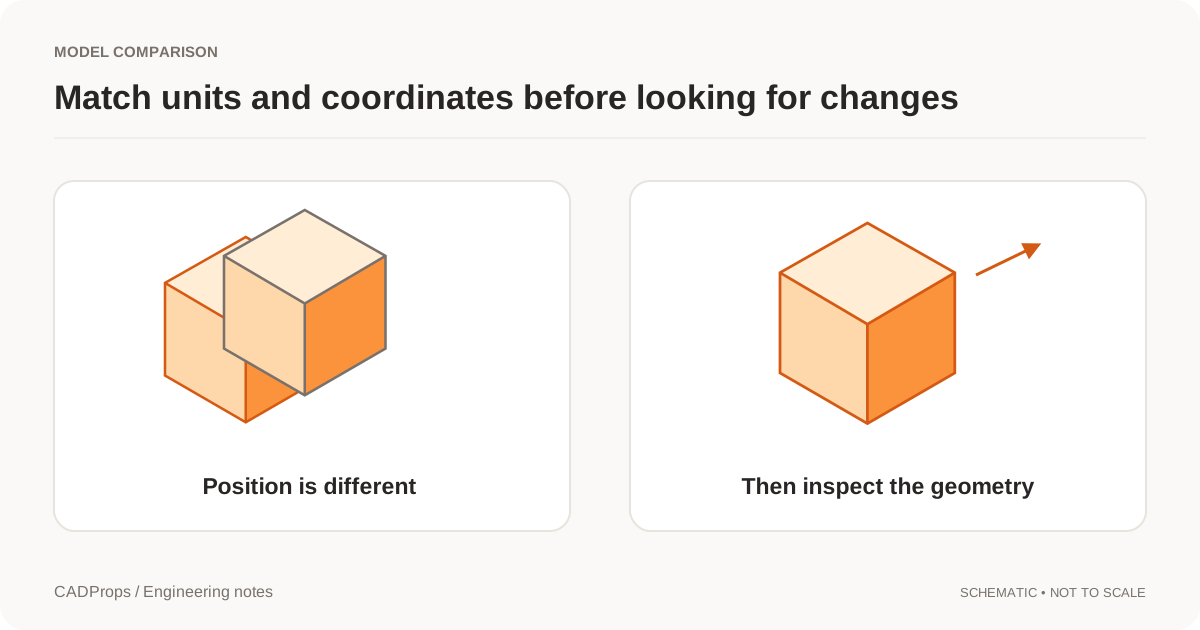 Versions & review
CAD Versions vs Revisions: Track Models and Exports
Keep upload history, engineering revision labels and converted files separate so a new export does not masquerade as a design change.
Take a closer look →Versions & reviewCompare CAD Revisions: Geometry and Property Checks
Use fixed versions, explicit units and a deliberate alignment method before interpreting overlays or property differences.
Take a closer look →Versions & reviewShare a Fixed CAD Revision: File and Version Checklist
Pin a shared model or comparison to an explicit version, check recipient permissions and handle replacements without silent updates.
Take a closer look →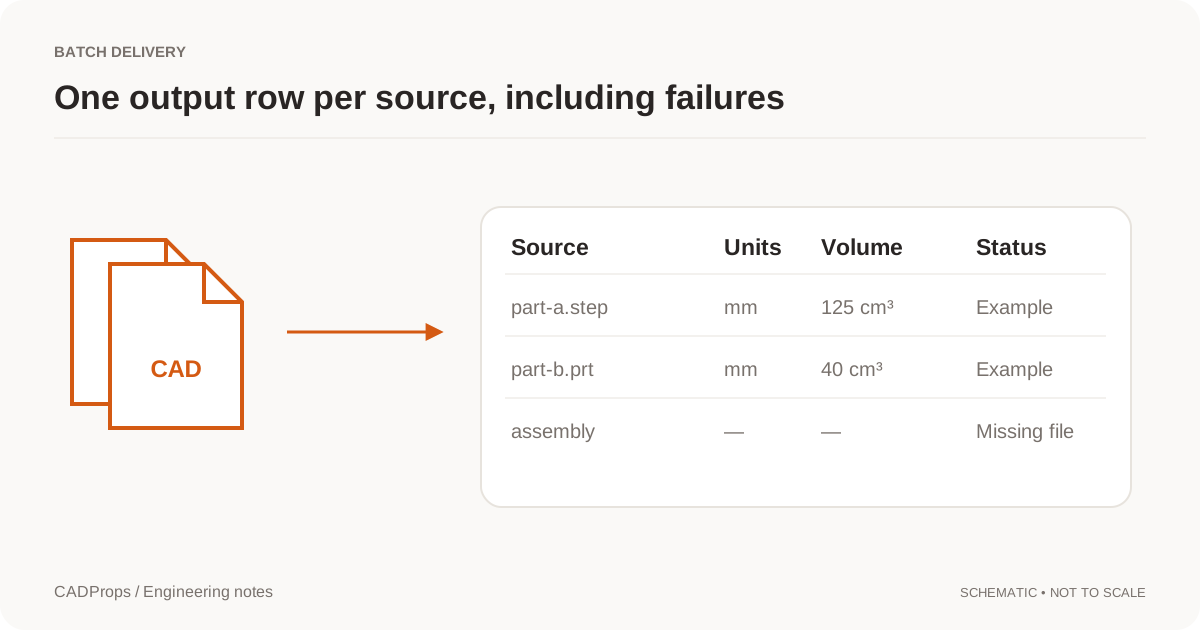 Batch & handoff
Export STEP Properties to Excel: Batch CAD Measurements
Design a useful batch report with one row per defined item, explicit units, material inputs and an exceptions list.
Take a closer look →Batch & handoffShare CAD Files with Suppliers: STEP Handoff Checklist
Prepare a small delivery package that identifies the model revision, intended use, units and any excluded components.
Take a closer look →ConversionCAD File Conversion Checklist: Units, Solids & Accuracy
Reopen the output, verify scope and units, inspect critical geometry, and include a short record of what was and was not checked.
Take a closer look →ConversionHow to Convert NX PRT to STEP: Units & Assembly Checks
Convert Siemens NX or UG NX PRT files to STEP with a repeatable check for source identity, units, assemblies and the converted geometry.
Take a closer look →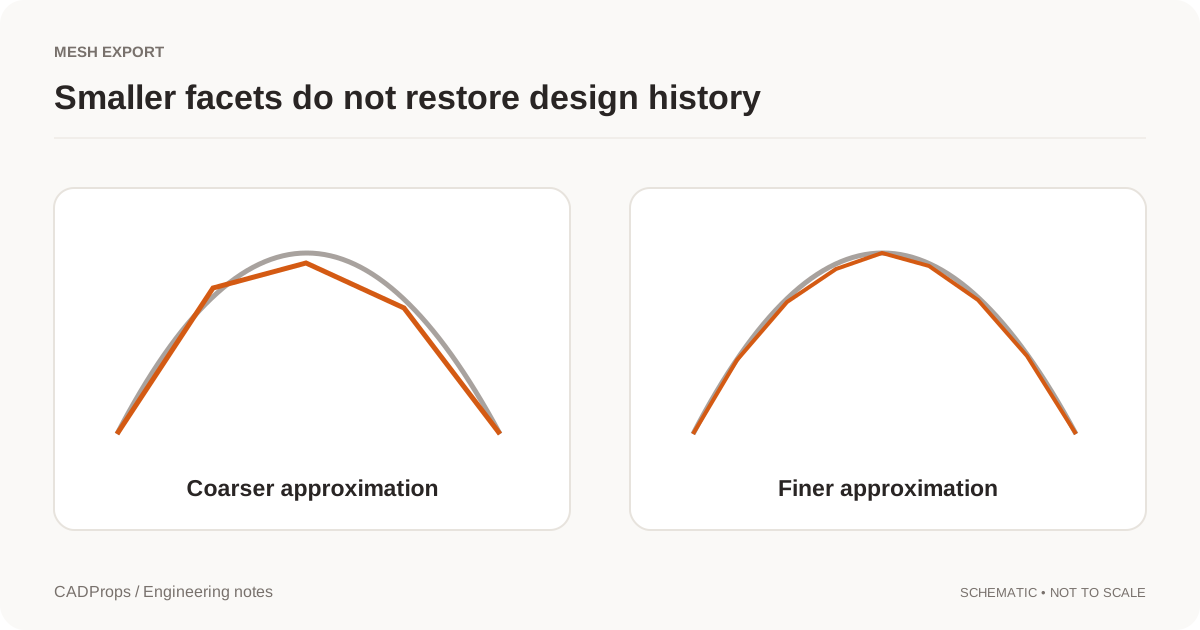 Conversion
STL Export Settings: Mesh Resolution, Units and Scale
Choose tessellation settings for the receiving task and verify curved features, thin regions and units after exporting.
Take a closer look →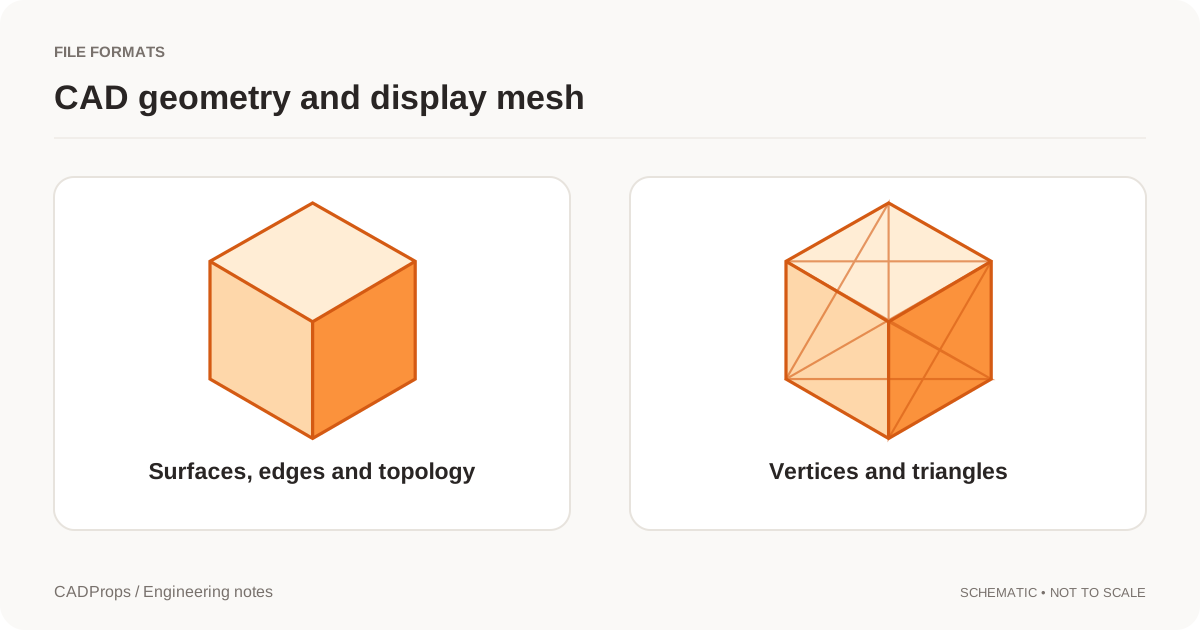 File formats
3MF vs STL: Units, Multiple Parts and Mesh Handoff
Compare 3MF and STL for mesh exchange, including declared units, packaging, multiple objects, metadata and what CADProps can actually inspect from each format.
Take a closer look →File formatsGLB vs glTF for CAD: 3D Model Files, Assets and Units
Use a display derivative for the web while keeping engineering geometry and revision records separate.
Take a closer look →File formatsParasolid vs STEP: CAD Geometry and Exchange Formats
Choose an exchange route by the receiving application and required data, not by assuming one file extension always converts better.
Take a closer look →File formatsSTEP AP203 vs AP214 vs AP242: Colors and CAD Data
Understand STEP application protocols without treating the highest version number as a guarantee that every CAD reader preserves the same data.
Take a closer look →File formatsWhy STEP Files Lose the SolidWorks Feature Tree
A neutral CAD export can preserve useful geometry without preserving the original feature history. Learn what to request and what not to promise.
Take a closer look →File formatsSTEP vs IGES: Which CAD Exchange Format Fits the Job?
Compare STEP and IGES for CAD handoffs, solids, surfaces, assemblies and downstream verification without assuming one file extension guarantees a perfect transfer.
Take a closer look →File formatsSTEP vs STL: CAD Measurement, Geometry and Accuracy
STEP and STL serve different jobs. Learn what changes when surfaces become triangles and which checks belong in a CAD handoff.
Take a closer look →File formatsSTEP vs STP Files: Extensions and CAD Compatibility
STEP and STP are common extensions for the same exchange format. Learn what renaming changes, what it does not, and which checks matter more.
Take a closer look →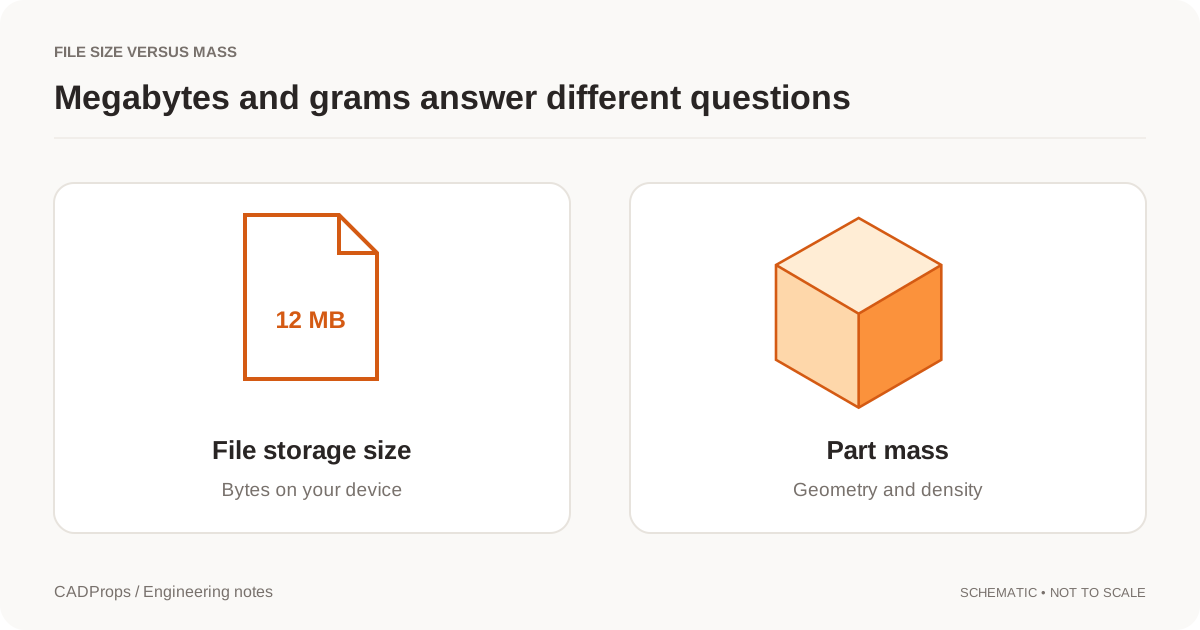 Measurement
CAD File Size vs Part Weight: Why MB Does Not Mean Mass
Megabytes describe storage. Grams describe mass. Here is why a large file can represent a light part, and what you need for a useful mass estimate.
Take a closer look →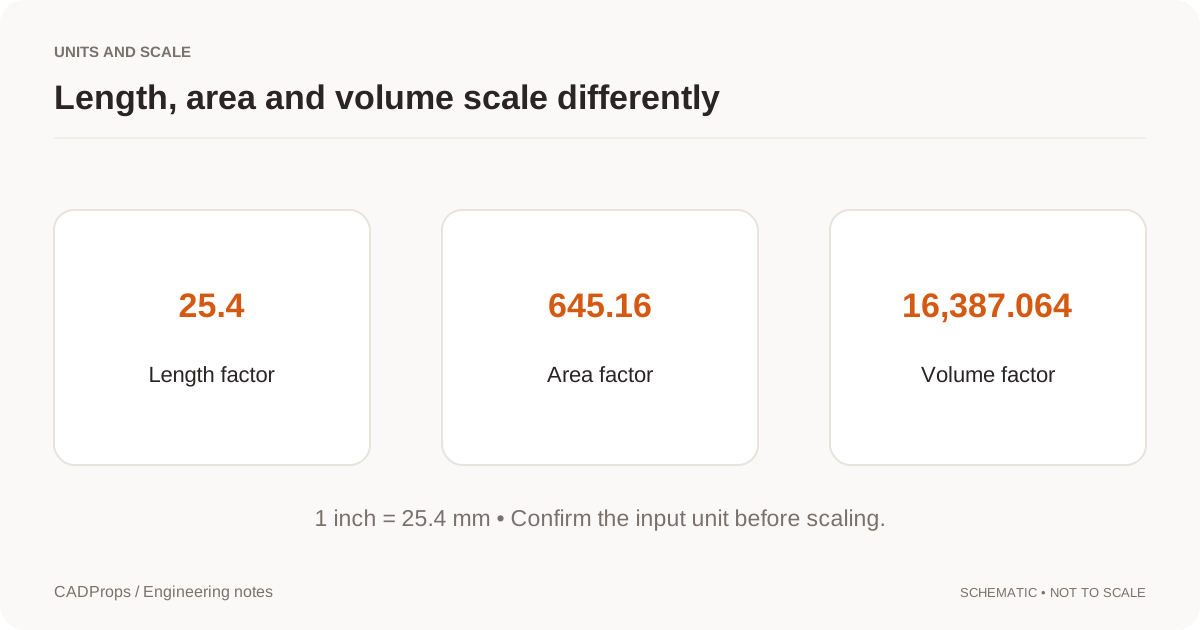 Measurement
STEP File Scale Wrong by 25.4? Fix Inch and mm Units
Diagnose STEP and CAD models that import 25.4× too large or small by checking inch/mm interpretation, a known dimension and downstream import settings.
Take a closer look →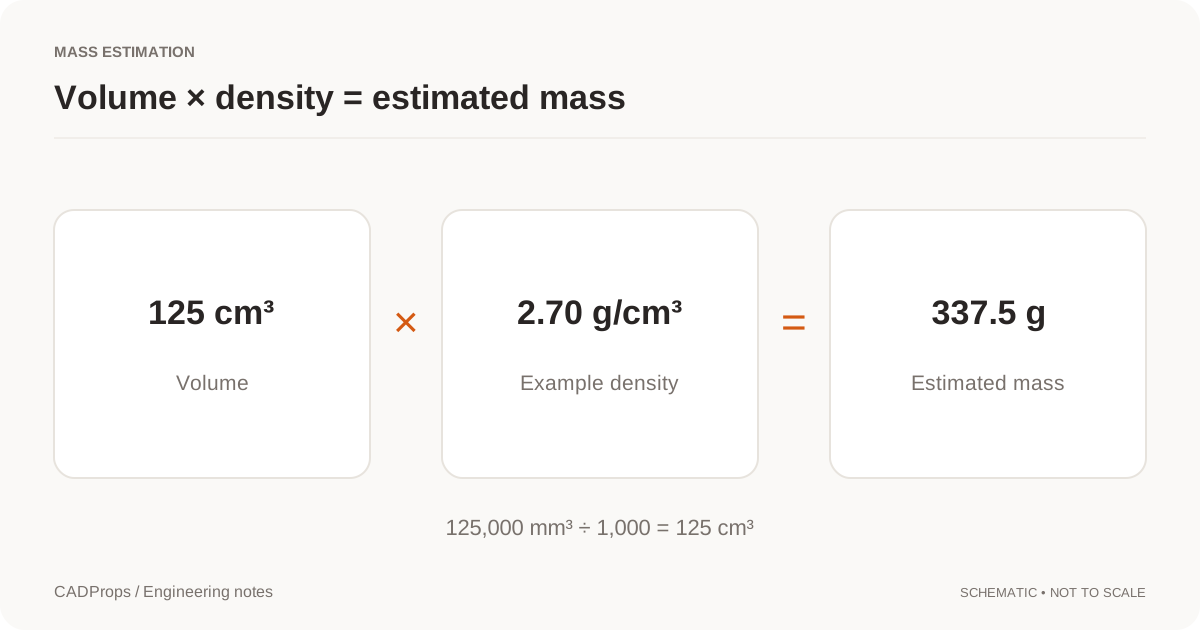 Measurement
How to Calculate Volume from a STEP File
Calculate volume from a STEP file using valid CAD solid geometry, verify units and body scope, diagnose unavailable results, and use volume safely for mass estimates.
Take a closer look →MeasurementCalculate STEP File Weight from Volume and Density
Work from valid solid volume, choose a documented density and keep units, configuration and assembly scope visible in the result.
Take a closer look →MeasurementMeasure STEP Files Online: Dimensions, Distances & Units
Measure STEP files online, check X/Y/Z dimensions, verify units, distinguish bounding boxes from local measurements, and record the geometry scope correctly.
Take a closer look →MeasurementSTEP File Bounding Box: Get Overall Dimensions Online
Read a STEP file's overall X, Y and Z extents, understand why orientation changes a bounding box, and avoid confusing envelope dimensions with drawing dimensions.
Take a closer look →MeasurementDo STL Files Have Units? How to Fix mm vs Inch Scale
Understand why STL coordinates do not reliably declare physical units, diagnose mm-versus-inch scale errors, and verify dimensions before printing or manufacturing.
Take a closer look →MeasurementCalculate Surface Area from a STEP File
Calculate STEP file surface area from CAD faces, verify units and body scope, distinguish total geometry from process area, and avoid common coating-estimate mistakes.
Take a closer look →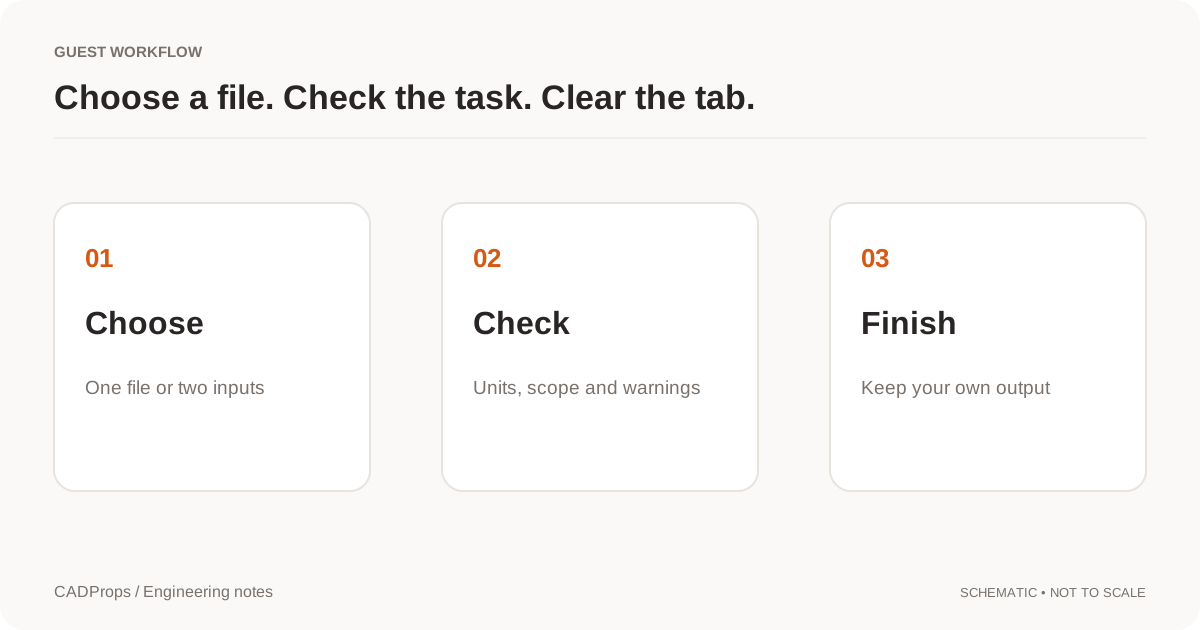 Opening files
Open CAD Files on Mac: STEP Viewers and Format Options
A practical Mac workflow for STEP, SLDPRT and NX PRT files: identify the format, check browser or desktop options, and verify the result.
Take a closer look →Opening filesHow to Open a CATPart File Without CATIA
Open CATIA V5 CATPart files without CATIA, verify version, geometry and units, package CATProduct dependencies, and convert readable models to STEP when needed.
Take a closer look →Opening filesHow to Open a CATProduct File Without CATIA
Open CATIA V5 CATProduct assemblies without CATIA by packaging referenced CATPart files, checking missing components, verifying dimensions and converting to STEP.
Take a closer look →Opening filesHow to Open an IAM File Without Autodesk Inventor
Open Autodesk Inventor IAM assemblies without Inventor by packaging referenced IPT files, checking missing components, verifying dimensions and converting to STEP.
Take a closer look →Opening filesHow to Open an IPT File Without Autodesk Inventor
Open Autodesk Inventor IPT files without Inventor, verify geometry and units, handle IAM assembly references, and convert supported models to STEP when needed.
Take a closer look →Opening filesHow to Open JT Files Online and Check Solid Geometry
Open a JT file in a browser, verify readable solids, dimensions and properties, understand JT geometry limits, and validate a STEP handoff.
Take a closer look →Opening filesHow to Open an NX PRT File Without Siemens NX
Open Siemens NX or UG NX PRT files without installing NX, identify ambiguous PRT sources, package assembly references, verify dimensions and convert to STEP when needed.
Take a closer look →Opening filesHow to Open SAT Files Online Without an ACIS CAD System
Open an ACIS SAT file in a browser, verify solids, units and dimensions, understand SAT versus SAB, and validate a STEP handoff before reuse.
Take a closer look →Opening filesHow to Open an SLDASM File Without SolidWorks
Open SolidWorks SLDASM assemblies without SolidWorks by packaging referenced SLDPRT files, checking missing components, verifying dimensions and converting to STEP.
Take a closer look →Opening filesHow to Open an SLDPRT File Without SolidWorks
Open SolidWorks SLDPRT files without SolidWorks, verify the source version and geometry, measure the part, and convert supported models to STEP when needed.
Take a closer look →Opening filesHow to Open an X_T File Online Without Parasolid Software
Open Parasolid X_T files online, verify the source model and units, measure readable geometry, and know when to convert the file to STEP.
Take a closer look →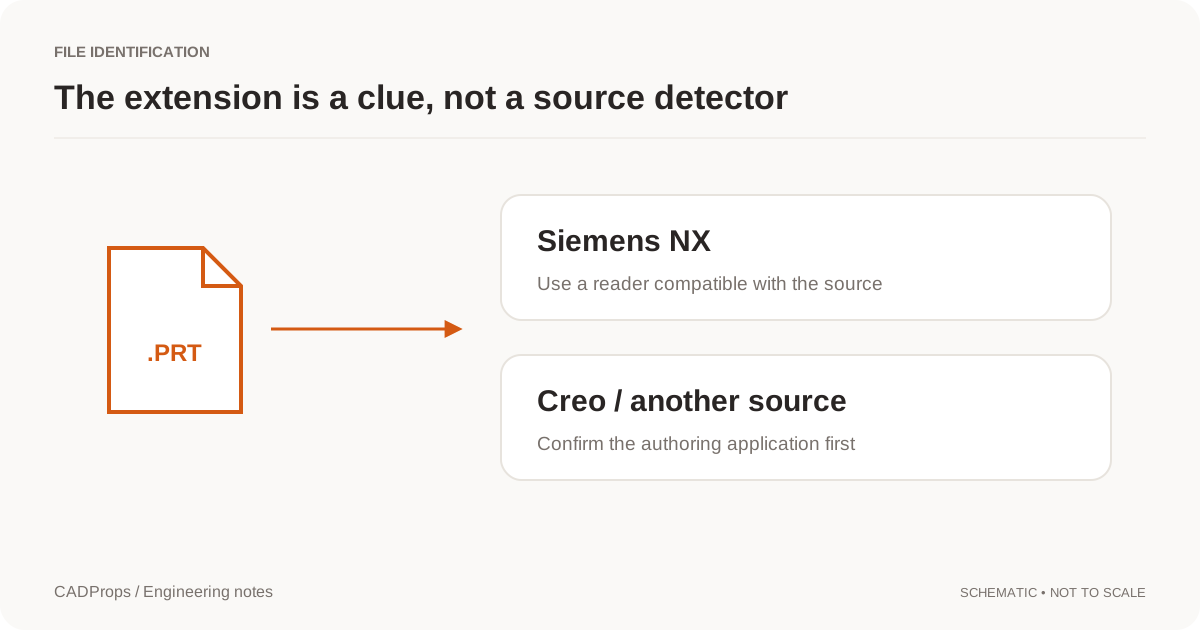 Opening files
NX or Creo PRT File? Identify the CAD Format
PRT does not uniquely identify Siemens NX. Check the sender, application version, dependencies and reader before attempting a conversion.
Take a closer look →TroubleshootingCATProduct Missing Parts? Fix CATIA Assembly References
Diagnose CATIA CATProduct assemblies with missing CATPart components, preserve folder structure, rebuild the package and avoid incomplete geometry or STEP exports.
Take a closer look →TroubleshootingglTF Missing Textures? Fix .bin and Image File Paths
Diagnose glTF files that open with missing geometry resources or textures, package relative .bin and image dependencies correctly, and know what CADProps does and does not render.
Take a closer look →TroubleshootingIAM Missing Parts? Fix Autodesk Inventor Assembly References
Diagnose Inventor IAM assemblies with missing IPT or nested IAM components, preserve folder structure, rebuild the package and avoid incomplete geometry totals.
Take a closer look →TroubleshootingIGES Surfaces Not Solid? Check Volume and Open Shells
Understand an IGES surface import before stitching boundaries or assuming the reader failed to create a solid.
Take a closer look →TroubleshootingSLDASM Missing Parts? Fix SolidWorks Assembly References
Diagnose SolidWorks SLDASM assemblies with missing SLDPRT components, preserve folder structure, distinguish partial geometry from complete results, and rebuild the package.
Take a closer look →TroubleshootingReduce STEP File Size: Keep Required CAD Geometry
Distinguish archive compression, model simplification and display optimization before changing a CAD handoff.
Take a closer look →TroubleshootingSTEP File Volume Zero or Missing? Check Solid Geometry
Diagnose STEP files that show zero or unavailable volume by checking open shells, solid closure, selected scope, units, missing components and geometry-processing warnings.
Take a closer look →Versions & reviewCAD Versions vs Revisions: Track Models and Exports
Keep upload history, engineering revision labels and converted files separate so a new export does not masquerade as a design change.
Take a closer look →Versions & reviewCompare CAD Revisions: Geometry and Property Checks
Use fixed versions, explicit units and a deliberate alignment method before interpreting overlays or property differences.
Take a closer look →Versions & reviewShare a Fixed CAD Revision: File and Version Checklist
Pin a shared model or comparison to an explicit version, check recipient permissions and handle replacements without silent updates.
Take a closer look →