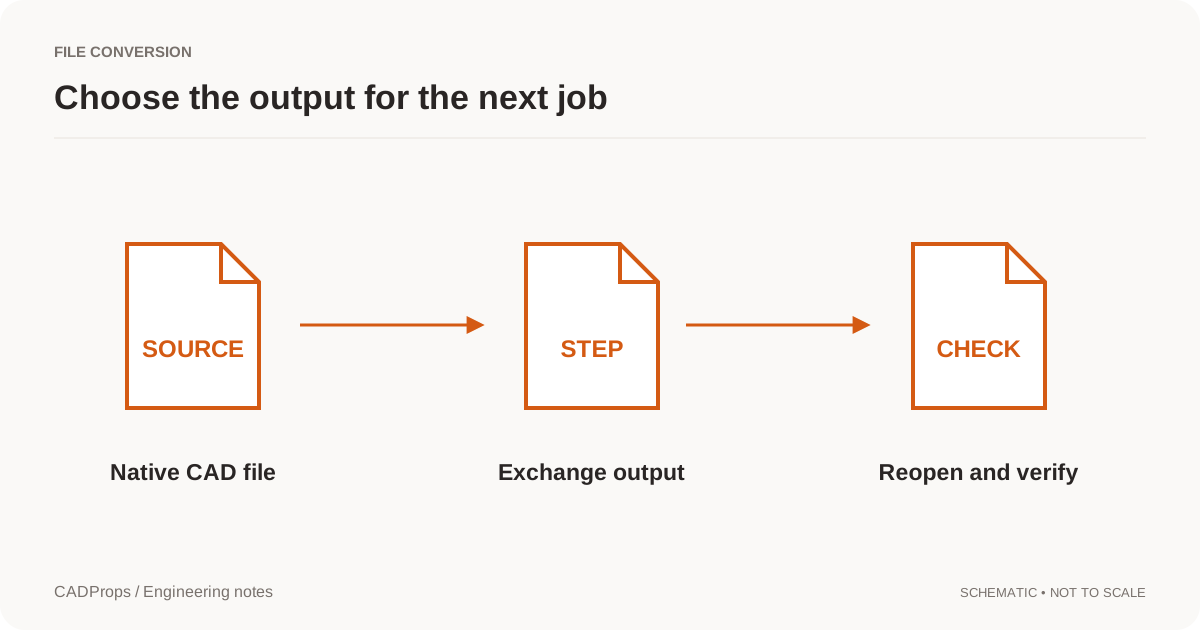

A recipient may ask for STEP, Parasolid or the native model. The useful answer depends on the receiving system and the data the handoff needs. There is no format choice that guarantees a perfect transfer between every pair of CAD applications.
Treat the extension as the start of the discussion. Agree a supported version, the intended scope and the information that must remain usable after import.
Distinguish the file family from the workflow
Parasolid exchange commonly appears as .x_t or .x_b; STEP commonly appears as .step or .stp. Reader and writer documentation identifies their supported versions and capabilities separately. Format reference.
A tool can support reading one format while having more limited options for writing it. Do not infer round-trip native editing simply because a file opens and can be exported again.
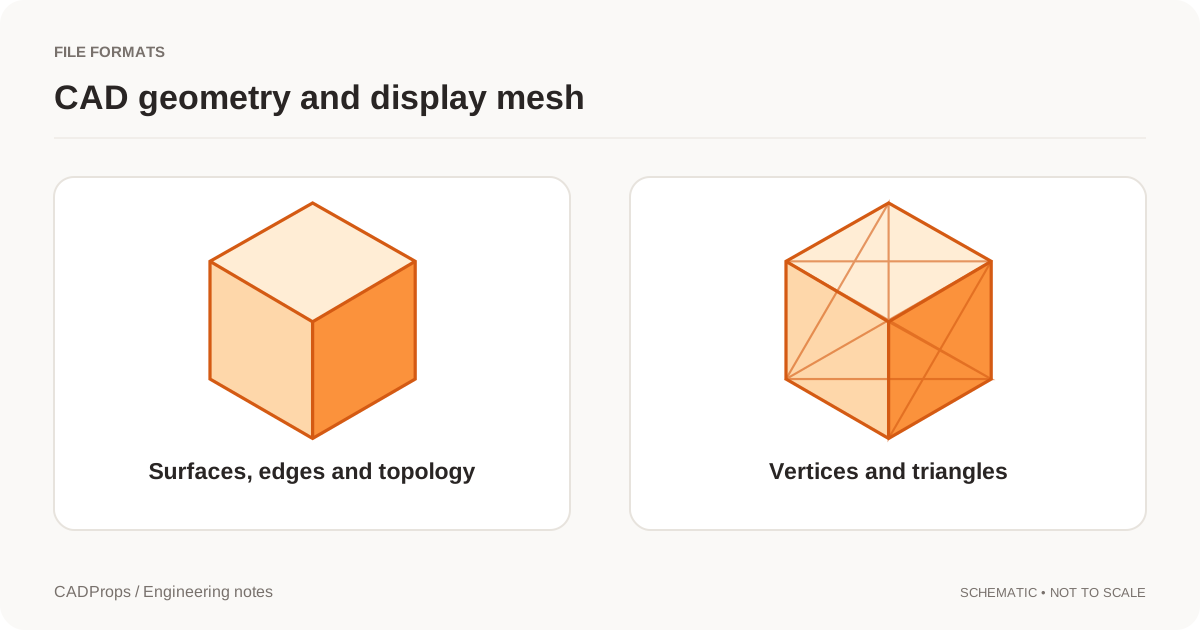
STEP is used for product-data exchange and can represent more than a mesh preview. NIST STEP overview. What is retained in a particular exchange still depends on the actual contents, exporter and importer.
Ask the recipient a task-specific question
Instead of “Which format is best?”, ask what their current software has been tested with for this task. Is the recipient inspecting the shape, programming a process, assembling components or reviewing manufacturing information?
A format that imports smoothly into one environment may not carry all the needed data into another. Version compatibility and configuration scope can be more important than a general preference for either extension.
| Requirement | What to confirm |
|---|---|
| Editable engineering geometry | The receiving tool can use the imported representation |
| Assembly review | Components, placements and names arrive as needed |
| Appearance | Relevant colors or presentation data are retained |
| Manufacturing information | The required information is present and interpretable |
| Repeated handoffs | A tested export/import combination can be reproduced |
These checks are intentionally independent of the format name.
Keep the native design as the source record
An exchange artifact is not a substitute for all original design history. Keep the native source, its dependencies and its revision label when that information matters to the project.
A recipient may be able to edit an imported solid without recovering the original sketches, constraints or intent. That can be useful, but it is a different editing workflow. Be explicit about it before promising that a conversion creates a native, fully parametric model.
If the job requires original feature editing, confirm a compatible native workflow rather than trying a chain of neutral exports and hoping the history reappears.
Test a representative file, not only a block
Use a part with the geometry the actual job relies on: a curved surface, a small feature or an assembly placement. A simple cube may open through many paths while telling you little about the important case.
Check units and a known dimension first. Then inspect the required local geometry and the metadata the recipient will use. Keep failures and partial transfers in a written note rather than comparing only successful previews.
When evaluating multiple formats, export them from the same source revision and configuration. Comparing unrelated states makes the format evaluation meaningless.
Avoid conversion chains without a reason
Every unnecessary step makes it harder to identify where a change appeared. If the receiving system accepts the original agreed exchange format, another conversion may add no value.
If STEP is required, a direct Parasolid-to-STEP task is easier to document than an undocumented route through mesh formats. That is a workflow recommendation, not a guarantee that any particular converter preserves every entity.
Write down the combination that worked
Record the source format version, export scope, target format, relevant options and the receiving application used for the check. Reuse that tested procedure for similar deliveries, but revisit it when a source release or requirement changes.
The best format choice for a job is the one supported by an agreed workflow and a verified result. A familiar extension is helpful; it is not evidence on its own.