Keep each file accountable
Every selected STEP file gets its own processing status. A failed file stays in the list with a reason instead of silently disappearing from the report.


Process a batch of STEP files and export real dimensions, area, volume and density-based mass as CSV.
 No account required
 Temporary workspaceCAD processing
Use one row per source to keep a mixed batch understandable. Record units, calculation scope and failures alongside the values rather than silently omitting difficult files.
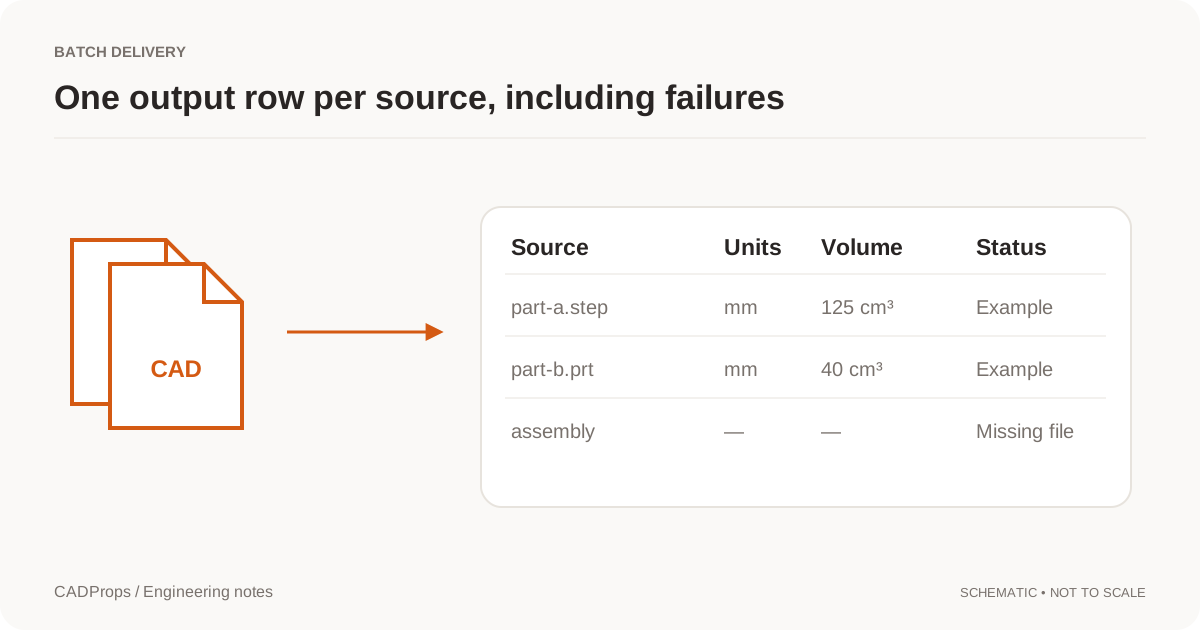
Every selected STEP file gets its own processing status. A failed file stays in the list with a reason instead of silently disappearing from the report.
Dimensions, area and valid solid volume are normalized to millimetres. The density you choose is applied consistently when estimating mass; confirm that it is suitable for the parts in your batch.
Export a CSV containing file names, status, dimensions, surface area, volume, density, mass, source units and warnings. This release does not export converted models or ZIP packages.
Generated STEP block: 20 × 30 × 40 mm, surface area 5,200 mm² and volume 24,000 mm³. At density 2.7 g/cm³ the calculated mass is 64.8 g. These values describe the synthetic block, not the default bearing sample.
Repository-generated samples are synthetic test models. Verify your own model's units and geometry before using results.
Each temporary task receives one row with units, status and warnings. A ZIP is one aggregate task, not one row per member.
The current batch density is applied to available volumes. Failed or volume-less models keep empty mass values and an explanatory status.
Selecting a file starts temporary server processing. Access is limited to your guest session. The entry shows configured retention and files can be deleted earlier.
Batch & handoffDesign a useful batch report with one row per defined item, explicit units, material inputs and an exceptions list.
Read the guide →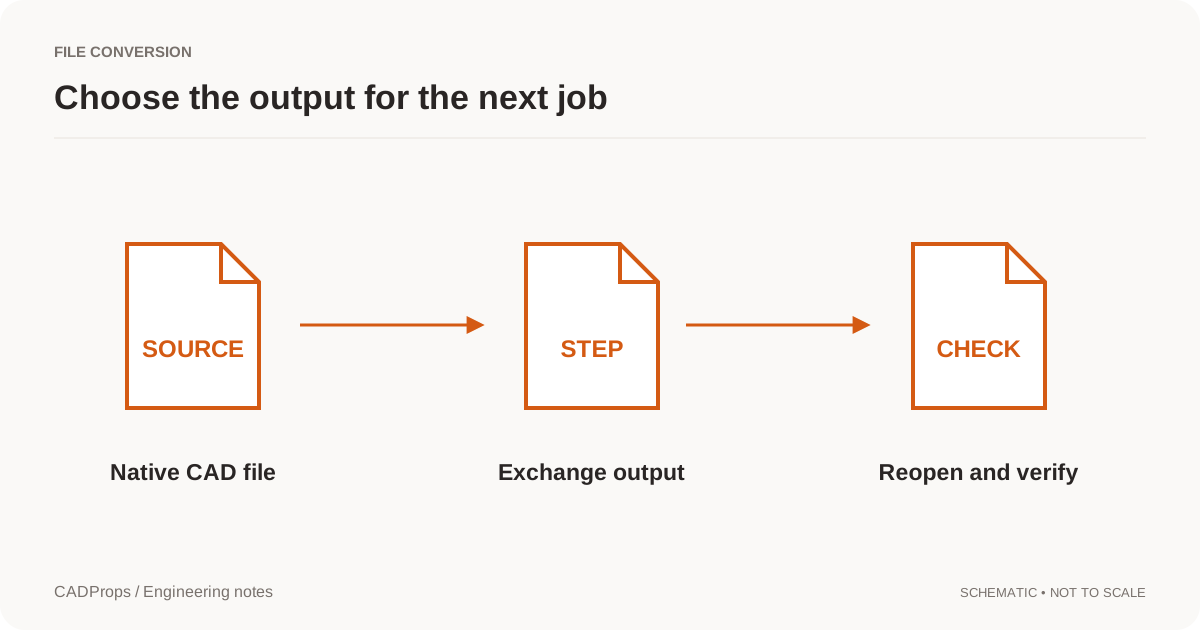 Conversion
Reopen the output, verify scope and units, inspect critical geometry, and include a short record of what was and was not checked.
Read the guide →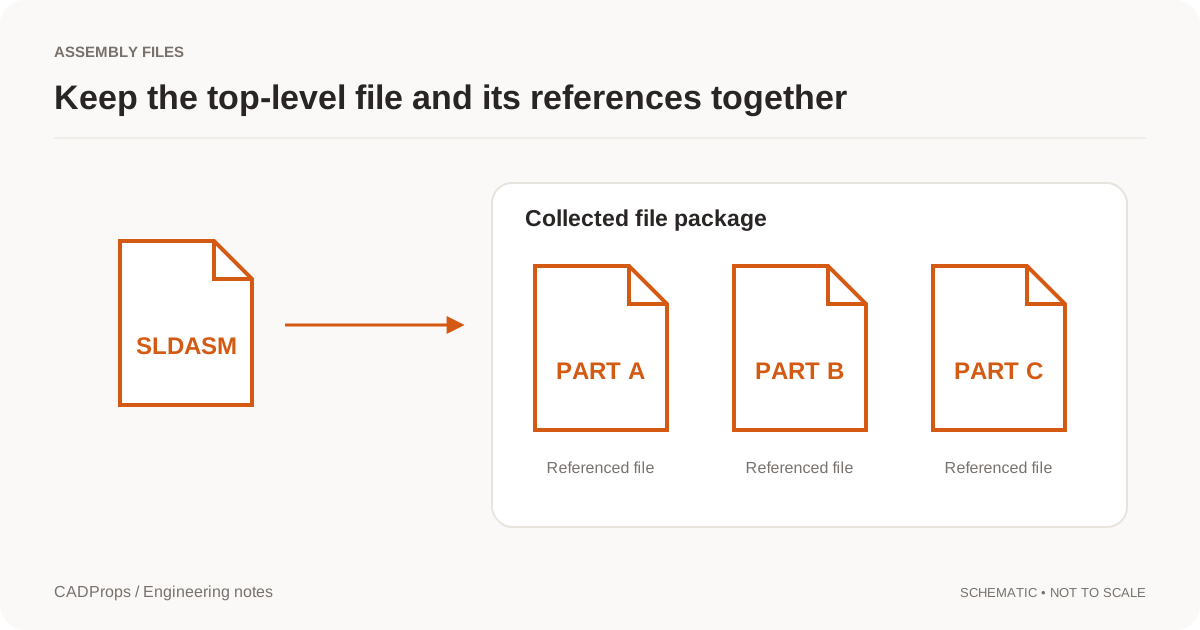 Batch & handoff
Prepare a small delivery package that identifies the model revision, intended use, units and any excluded components.
Read the guide →