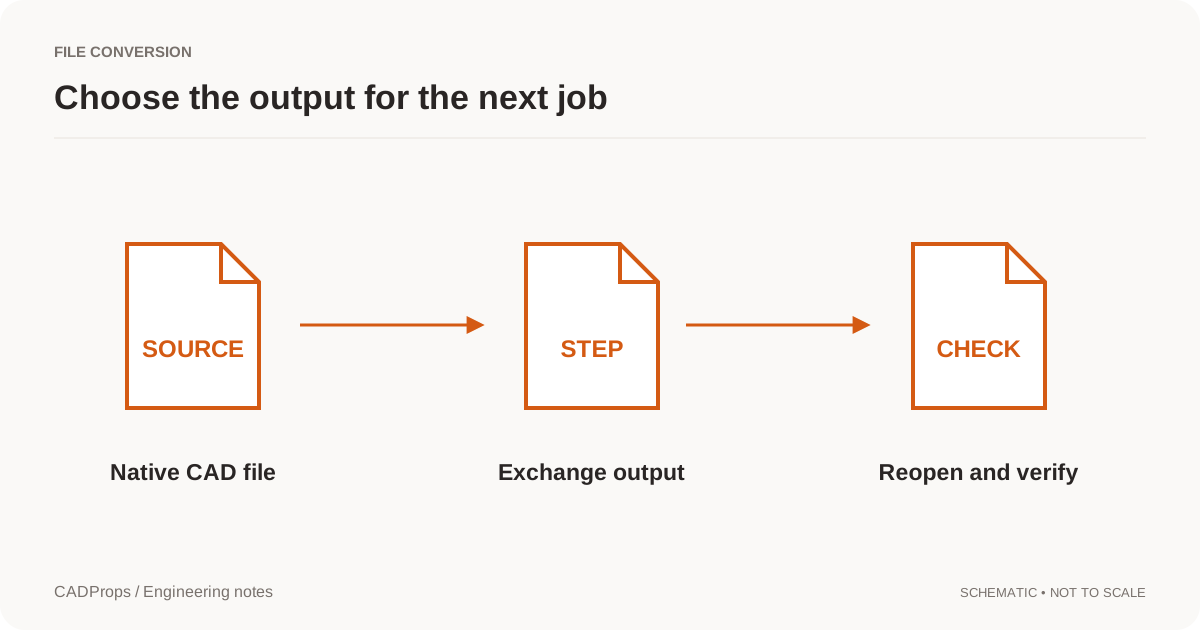

A browser preview and an engineering handoff have different requirements. A website needs a model that loads and displays well. A downstream CAD process may need engineering geometry, assembly structure or other information that a visual derivative does not preserve.
Keep those artifacts separate. Generate the web model from a known source version and label it as a visualization, rather than presenting it as a replacement for the engineering source.
What glTF is designed to do
Khronos describes glTF as a format for efficient delivery and loading of 3D scenes and models. It organizes scenes, nodes, meshes, materials and related resources for runtime use. Khronos glTF overview.
A .gltf asset normally uses a JSON description and may reference other resources. A .glb file packages the glTF structure in a binary container. Not every GLB is necessarily free of external dependencies, so inspect the actual resources before calling a file self-contained. glTF 2.0 specification.
For a simple web handoff, a packaged artifact is convenient. For a development pipeline, separate resources can also be useful. The format choice should match the hosting and update workflow.
CAD-to-web conversion includes tessellation
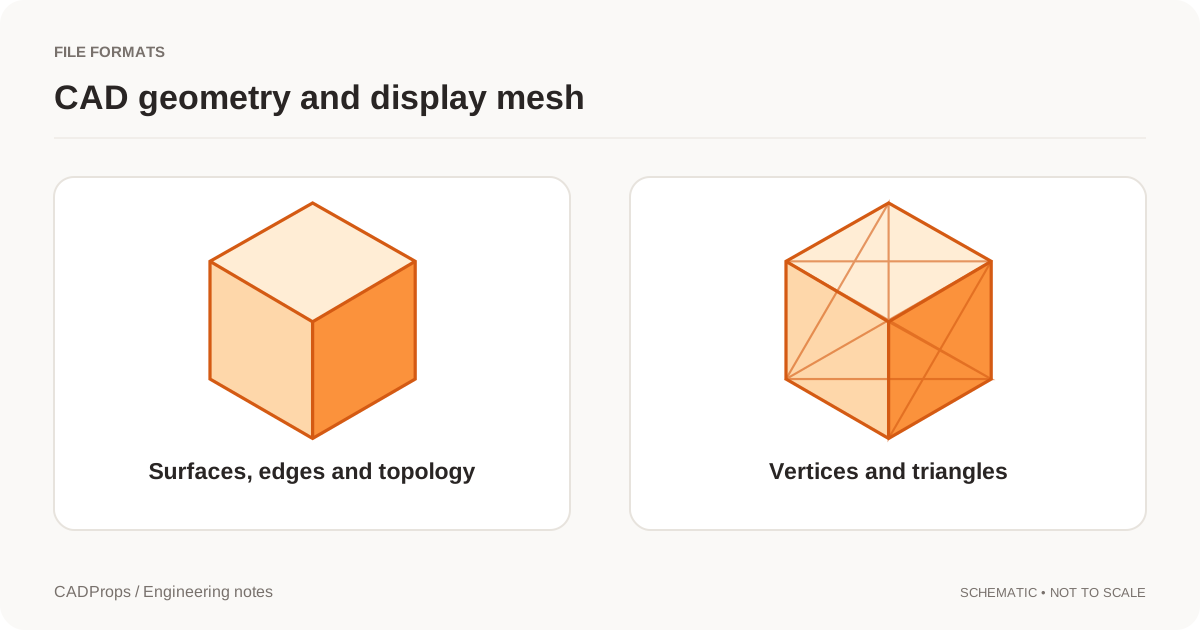
An engineering model may contain analytic surfaces and boundary-representation topology. A display asset typically needs triangle meshes. The conversion therefore includes approximation choices, not only a new filename.
Keep the tessellation settings linked to the source revision. Inspect small bores, thin regions and curved silhouettes at the intended viewing scale. A very dense visual derivative can be slow without improving the user's actual task.
Do not use the browser preview's triangle mesh as an undisclosed substitute for original-geometry measurement. If the UI displays engineering properties, obtain them from the appropriate calculation path and identify the source.
Check units and orientation after export
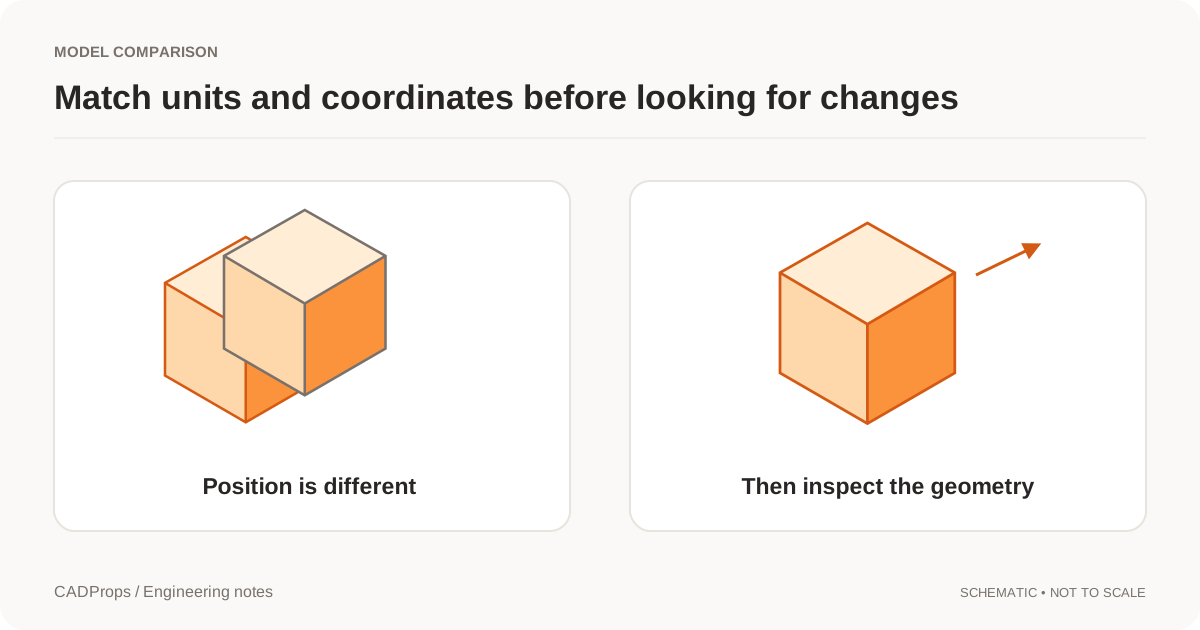
The glTF specification defines conventions for its coordinate system and units. A CAD source can use a different orientation or unit convention, so the conversion needs an explicit transform rather than a guess based on how the model looks. Coordinate and unit conventions.
Check one known size in the consuming application. A model that fits inside the preview window has only passed the camera-framing test. It has not passed the scale test.
For assemblies, inspect component placements and hierarchy. A visual scene tree can be useful for selection and isolation, but it is not automatically a complete engineering bill of materials.
Publish only the data needed for the preview
A display derivative can expose part names, hierarchy, textures or other details. Decide what is appropriate for the audience. Removing the source download button does not make the displayed geometry impossible to retain.
For private sharing, use real authorization for the asset requests. A page marked noindex is not protected from someone who can access its address. Search indexing and access distinction.
For public examples, use models you are permitted to publish and keep their source and license record with the project.
Keep source and preview versions linked
A preview should identify the source version it represents. Rebuilding its materials or compression should create a new artifact record without pretending that the design geometry was revised.
If the source model changes, do not silently switch a fixed external review link to a new shape. Generate a new preview for the new source and preserve the version relationship in the share interface.
A simple acceptance pass
Open the asset in the intended viewer. Check loading, scale, orientation, missing resources, component visibility and a few relevant features. Test the smallest device class you intend to support rather than assuming a desktop preview predicts mobile performance.
A good web derivative makes inspection convenient while leaving the engineering source traceable. The CAD-to-GLB page explains this workflow, but model format conversion is not available in this release.