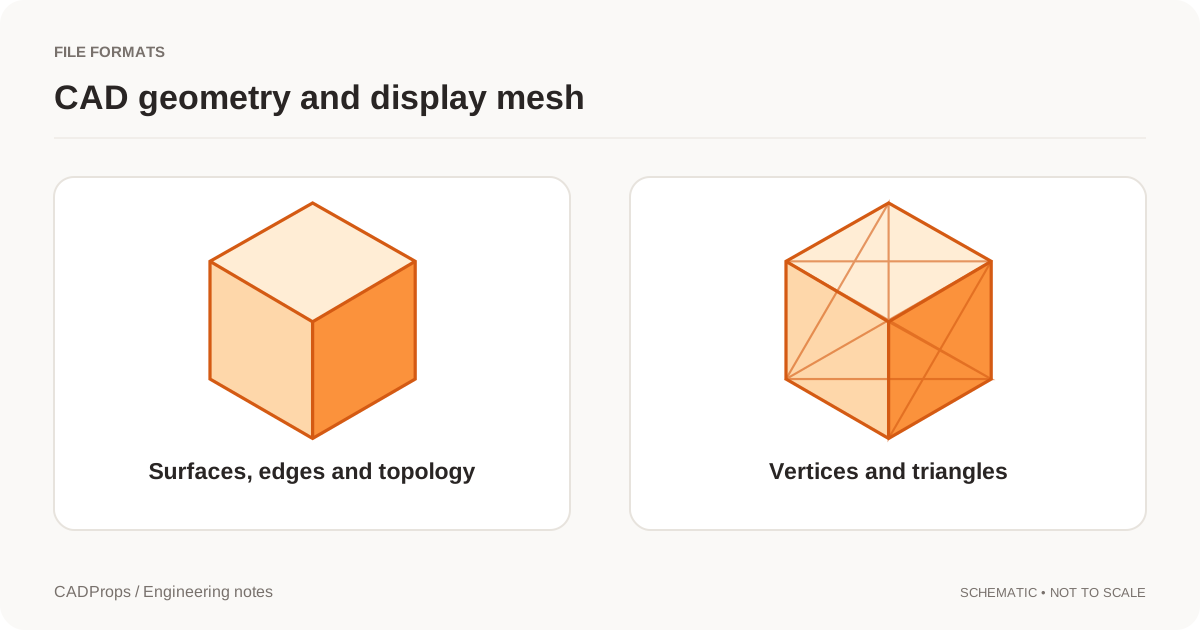

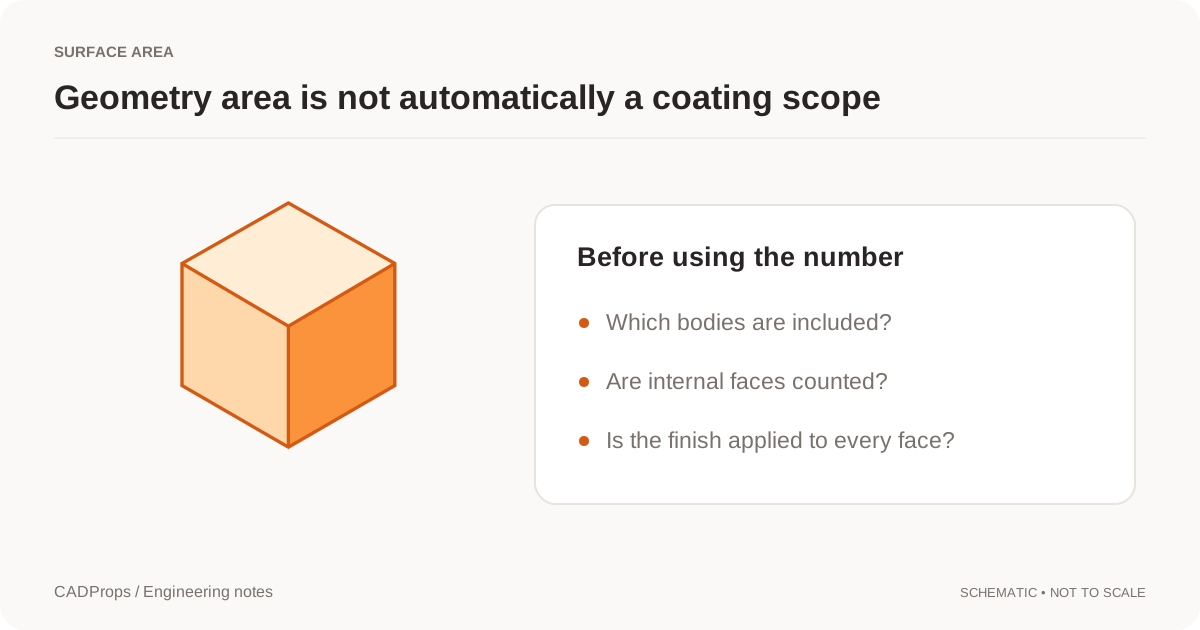
An IGES file that opens as a collection of surfaces is not automatically corrupt. First establish what the sender exported and what the receiving reader supports. The source may intentionally describe surfaces rather than a closed solid.
The important distinction is between a complete surface model for the intended task and a damaged or incomplete boundary that was supposed to define a solid. They can look similar in a shaded view but require different responses.
Inspect the imported entities
Look at the body and surface list before relying on a volume result. Is the reader presenting sheets, open shells or solids? Are hidden entities excluded? Is there a validation message explaining an open boundary?
Reader documentation distinguishes geometry import and post-processing. Some exchange workflows include sewing or related operations, particularly for surface-based data. STEP data categories. That does not mean every set of surfaces can or should be joined automatically.
Keep the original file and retain the import settings. A second attempt is much easier to understand when you can reproduce the first one.
Ask whether a solid was the intended deliverable
If the sender needs you to inspect a surface design, a surface result may be correct. If the recipient needs material volume, mass or a solid-based downstream operation, ask for the intended closed model or an agreed export.
Do not assume that every visually enclosed region is meant to become solid material. Internal boundaries, multiple bodies and deliberate openings can matter to the design.
A useful message is: “The file imports as open surfaces. For this task we need a valid closed solid representing the finished part. Can you confirm the export scope and provide the corresponding model?”
Check the symptom before using healing tools
| Symptom | First check |
|---|---|
| One obvious missing patch | Whether the export omitted an intended face |
| Small boundary mismatch | Import tolerances and validation details |
| Many unrelated sheets | Export scope and entity types |
| No volume despite a closed-looking image | Actual solid validity, not shading |
| Different surface count after import | Representation changes, not just the count |
A changed face count does not by itself prove a shape change. Different translations can split or merge representations. Inspect the geometry and the required behavior.
Sewing and reconstruction are different tasks
Sewing tries to relate boundaries under chosen conditions. Rebuilding a missing surface requires information about the intended shape. A general healing command cannot be assumed to recover design intent that is absent from the input.
Open CASCADE's Shape Healing guide describes targeted operations and their parameters. Shape Healing. Apply a specific operation to a known problem, preserve the original and inspect the changes.
Avoid increasing tolerances blindly until the software reports success. That can produce a topological result without demonstrating that the resulting geometry is suitable for the intended engineering use.
Do not substitute an envelope for material volume
When solid volume is unavailable, a bounding box still describes an outer extent. It does not measure the material in the part. The same caution applies to closing a hole that was an intentional opening merely to obtain a mass value.
A report should state that volume was not computed and explain the input condition. An unavailable value is more useful than a number derived from the wrong shape.
Choose the next exchange route deliberately
If the authoring system can export the required solid in STEP or another agreed format, a fresh source export may be preferable to speculative repairs. Test the new export in the receiving workflow and verify the same scope, units and functional regions.
The volume troubleshooting guide gives the next checks when a file still cannot support a valid material-volume calculation. Treat each result according to its declared representation rather than expecting all viewable files to behave as solids.