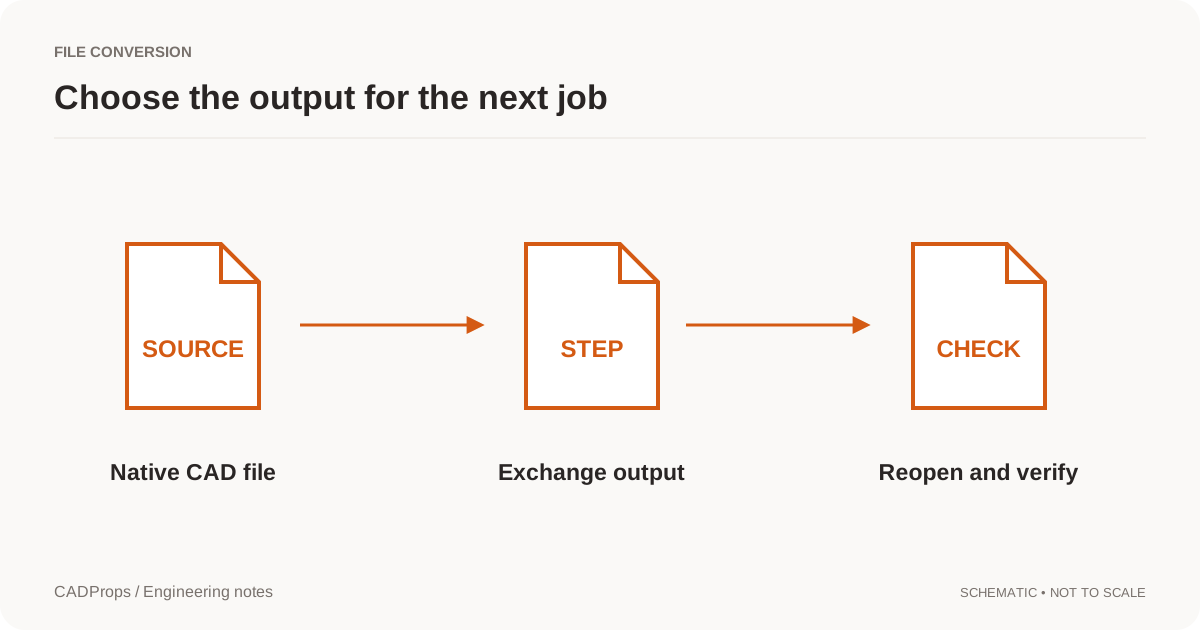

An SLDPRT attachment is not much help when the machine in front of you has no SolidWorks installation. Before downloading another application or asking for a different file, decide what you need from it. Looking at a mounting face, checking a hole location and editing the original design are three different jobs.
For inspection, a compatible native-file viewer may be enough. For use in another CAD system, ask for a neutral export such as STEP. For a design change that depends on the original sketches, dimensions or configuration rules, go back to the authoring system rather than assuming a viewer can recover that workflow.
Check which file you actually received
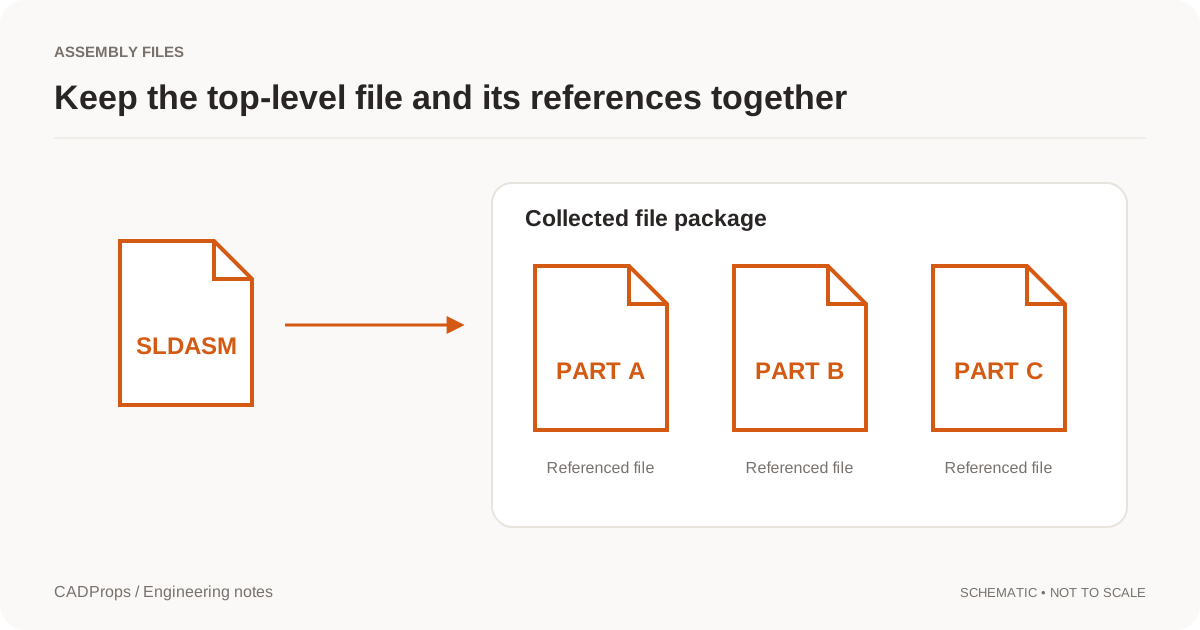
A SolidWorks part commonly uses .sldprt. An assembly uses .sldasm and can refer to other files. A drawing is a separate type of document. Rename none of them: changing .sldprt to .step does not translate the data inside it.
Reader support is also version-specific. A tool that lists SolidWorks among its formats may still need an update before it can read a newly saved file. Technical reader documentation separates format versions, assembly structure, geometry and other imported data; treat those as separate compatibility questions, not one yes-or-no badge. See the format capability reference.
Ask the sender for the source application and version when an otherwise ordinary file is rejected. Keep the original attachment unchanged so that a later test is using the same input.
Choose the route that matches the job
| What you need | Reasonable starting point | What to verify |
|---|---|---|
| A quick visual inspection | Native-file viewer | The expected component and configuration are shown |
| Overall dimensions | Viewer with geometry measurement | Units, measurement source and selected bodies |
| A file for another CAD system | STEP or an agreed neutral export | The receiving system opens the result |
| Original parametric editing | Compatible authoring workflow | Sketches, constraints and dependencies are available |
Do not convert through STL just because an STL viewer is easy to find. A display mesh is useful for viewing, but taking a part through a mesh-based intermediate can change what is available for downstream engineering work. The STEP and STL comparison explains that distinction.
A sensible first inspection
Start with a named, non-confidential sample whenever you are evaluating an unfamiliar service. Then check the actual part in a predictable order. Confirm its orientation, unit system and overall extent. Count the visible bodies, isolate any body that looks unrelated, and check whether the model represents the configuration you expected.
Measure one known dimension. A screenshot that looks right is not a unit check. If the sender says a flange is about 120 mm wide and the viewer reports something very different, stop before calculating a mass or exporting another file.
Inspect the geometry rather than the thumbnail alone. A rendered image can look convincing without supporting selection of faces, distances or volume. When the result is only a saved preview, the interface should say so.
When asking for STEP is the quicker option
Ask the sender to export the intended configuration and tell you the units, revision and whether the package is a part or assembly. For a simple one-off handoff, this can be less work than troubleshooting an unsupported native release.
A useful request is specific: “Please send the released bracket as STEP, in millimeters, with the same revision label as the drawing. Please include the native file as a reference.” That message is more actionable than “Send a file I can open.”
STEP is used for exchanging product model information; its contents can include assemblies and manufacturing information as well as geometry. What survives a particular transfer still depends on the export and import implementations. NIST describes those uses.
Keep viewing separate from approval
Opening the file is the first check, not a sign-off. A viewer does not establish the applicable drawing revision, material specification or inspection plan. Record the filename and revision you reviewed, and identify any dimension you could not verify.
For supplier handoffs, include the model alongside the controlling drawing or agreed specification. That leaves the next person with a clear reference rather than an attractive picture and an assumption.