
A CAD file arriving on a Mac presents two separate questions: which application understands its contents, and what you need to do with it. Opening a model to inspect a bracket is not the same task as editing the original feature history or exporting a supplier-ready assembly.
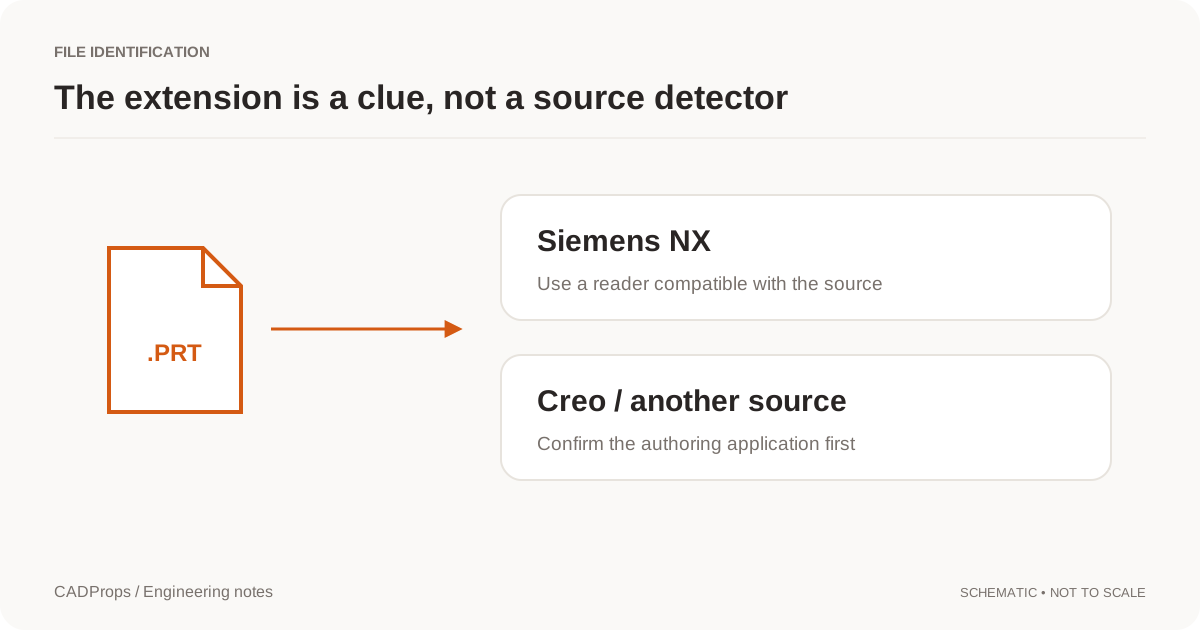
Start with the original extension and the authoring application. For STEP, the exchange format is the useful clue. For SLDPRT, the SolidWorks source matters. For PRT, confirm the source rather than assuming it is an NX file. Keep the original file unchanged while you decide which reader to use.
Choose between a browser and a desktop reader
A browser interface avoids an installation step, but it still needs a compatible CAD reader behind it. Some tools process data locally; others upload to a server. Read that distinction before selecting a confidential file. The absence of a download button for software does not tell you where the model is processed.
A desktop reader can be appropriate when files must stay within a controlled workstation. Check the current vendor's macOS support, input formats and release coverage. The official eDrawings FAQ is one reference for its product and platform support; do not assume every platform edition has identical capabilities. Product availability is not a blanket guarantee for your particular file version.
| Need | Check before starting |
|---|---|
| Look at a part | Actual native or exchange-file support |
| Measure it | Geometry availability and units |
| Open an assembly | Referenced files and chosen configuration |
| Convert it | Supported output, not just supported input |
| Inspect a confidential model | Where bytes are processed and retained |
STEP and STP on a Mac
The STEP filename extension is not tied to one operating system. A suitable reader is still required. If a model does not open, inspect the error and loading scope rather than repeatedly changing the extension. Missing or invalid content does not become valid on a different operating system.
Before using a reported volume or mass, confirm that the reader loaded the intended solid. A shaded preview is not a complete validation. See the STEP inspection page and volume checks for the questions to ask.
SolidWorks and NX files
A native file can include configurations and assembly relationships that an online viewer may not fully reproduce. If you only need a neutral exchange deliverable, ask the sender for a STEP export with the intended configuration and units. If direct native reading is essential, use a compatible source-specific reader and state which parts of the data it actually loaded.
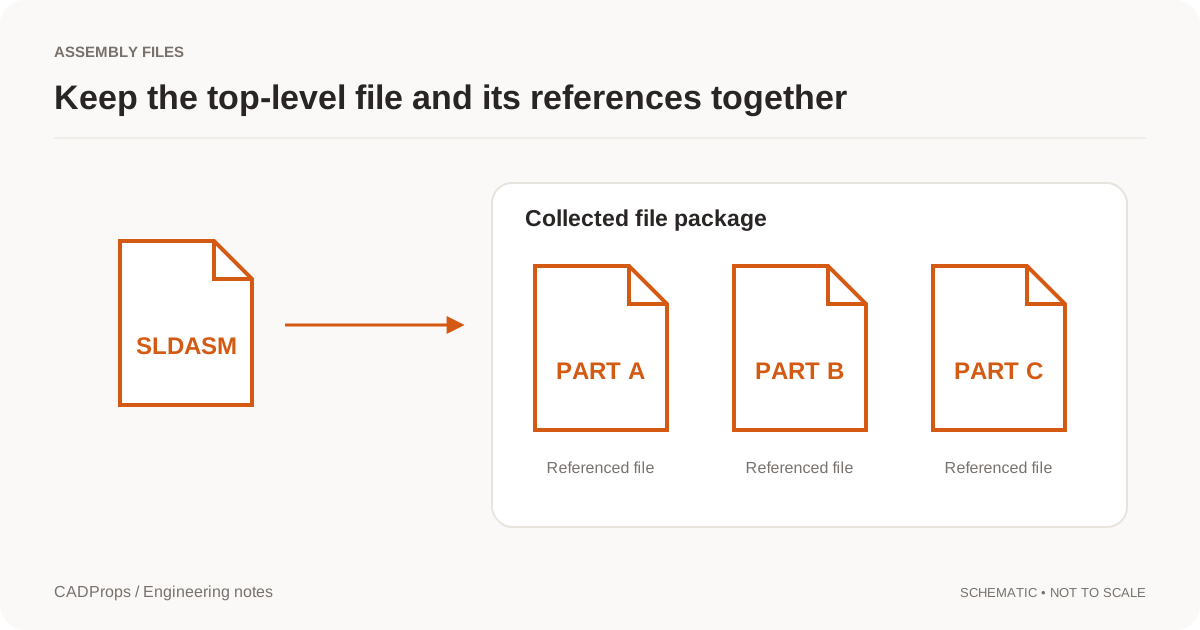
For an assembly, copying only the top-level file may not be enough. Collect the references and keep meaningful directory relationships intact. A ZIP can make transport easier, but the viewing tool must explicitly support extracting and resolving it.
Trackpad and display checks
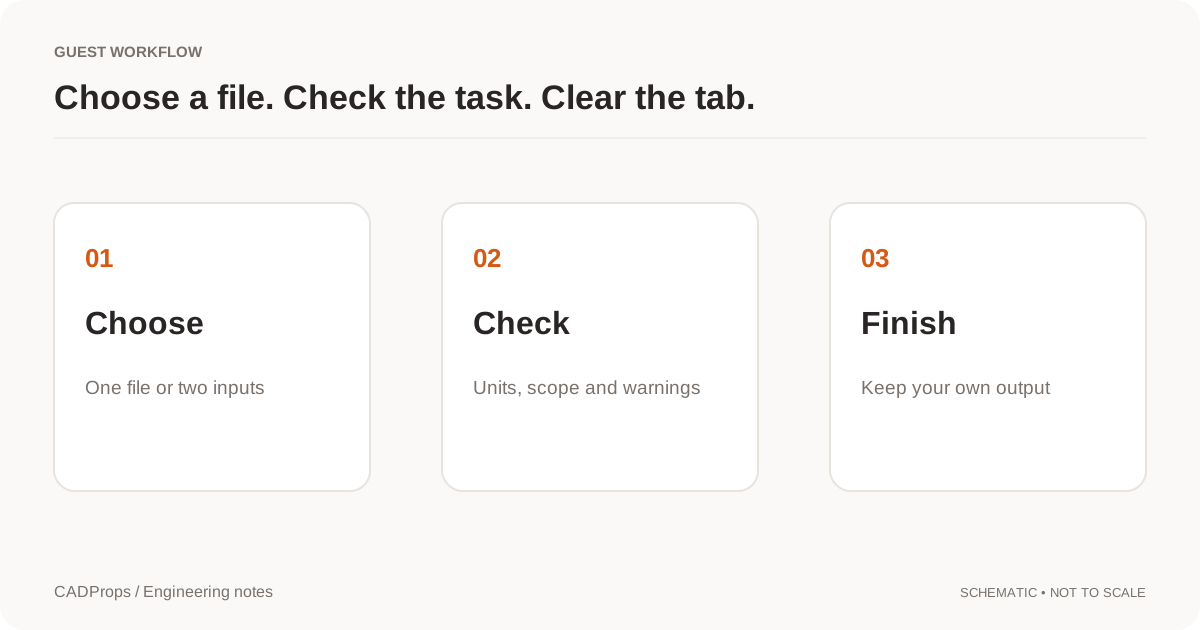
Once the model is open, find fit-to-view, standard views and reset-camera controls. A model that is far from the origin or outside the current camera view can look empty even when some data loaded. Conversely, fitting a visible shape does not prove an assembly is complete. Check the component count and warnings too.
Use one known dimension to establish scale. Record which units the reader interpreted; do not resize by eye to make the result look plausible. Browser memory, GPU support and file complexity can affect the viewing experience, so test representative models instead of relying on “works on any device” copy.
What this site can inspect
CADProps processes supported files on the server and displays results in a guest workspace. Browser support depends on WebGL and the actual model; a successful sample is not a compatibility guarantee for every Mac or CAD version. SolidWorks and NX are format notes, not native readers. Ask for a self-contained STEP export to use the STEP viewer.