
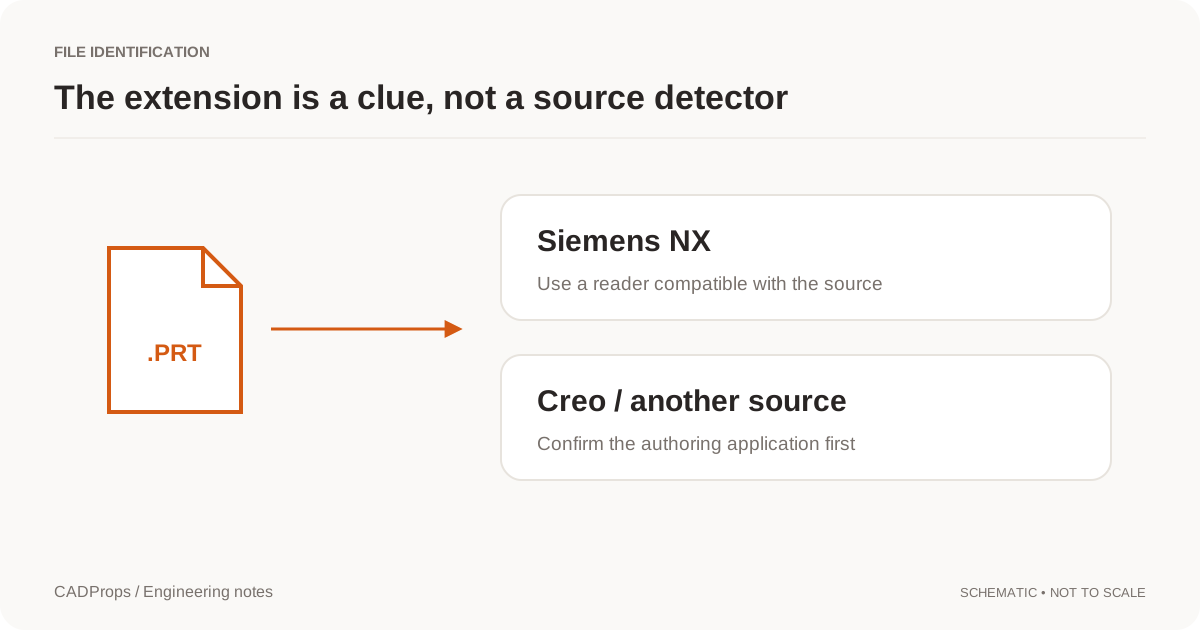
A file called housing.prt does not give enough information to select a CAD reader. In mechanical CAD, the PRT extension is used by both Siemens NX and Creo. A source-specific viewer may accept one and reject the other. The 3D-Tool NX format page explicitly notes this ambiguity.
Ask for the source, not a new filename
The quickest useful questions are: which application created the file, which release saved it, and is it a standalone part or part of an assembly? If the sender is unsure, ask them to check the source application rather than forwarding the file through several converters.
Keep any version suffix supplied by the source workflow. Changing the extension, deleting suffixes or naming the file nx-model.prt does not translate its contents. A ZIP archive may also contain multiple PRT files from different workflows; each input still needs identification.
Do not rely on a file icon
The operating system associates extensions with applications. That association is a convenience, not a detector. The same file can show a different icon on another computer without changing a single byte. A website that lists the filename after upload has also not necessarily identified the format.
A production reader should identify its input from the content or from a documented import route, then report the result. If detection is uncertain, ask for confirmation. Do not silently select NX and return a misleading “corrupt file” message for a valid file from another system.
| Evidence | What you can reasonably conclude |
|---|---|
| Filename ends in PRT | The source still needs identification |
| Sender confirms NX and release | A specific compatible reader can be selected |
| Reader reports a known source | Continue with scope and geometry checks |
| Only a saved preview is available | Viewing may be possible, but geometry tasks remain limited |
Assemblies add a second question
Even after identifying NX, confirm whether the file depends on other components. A top-level assembly that opens with only some components should remain visibly incomplete. Ask for a collected package with the intended configuration and component references.
Do not generate a total mass, total surface area or “complete conversion” result from whatever happens to load without explaining the scope. The useful output distinguishes a source-format issue from a missing-reference issue.
When STEP is the better request
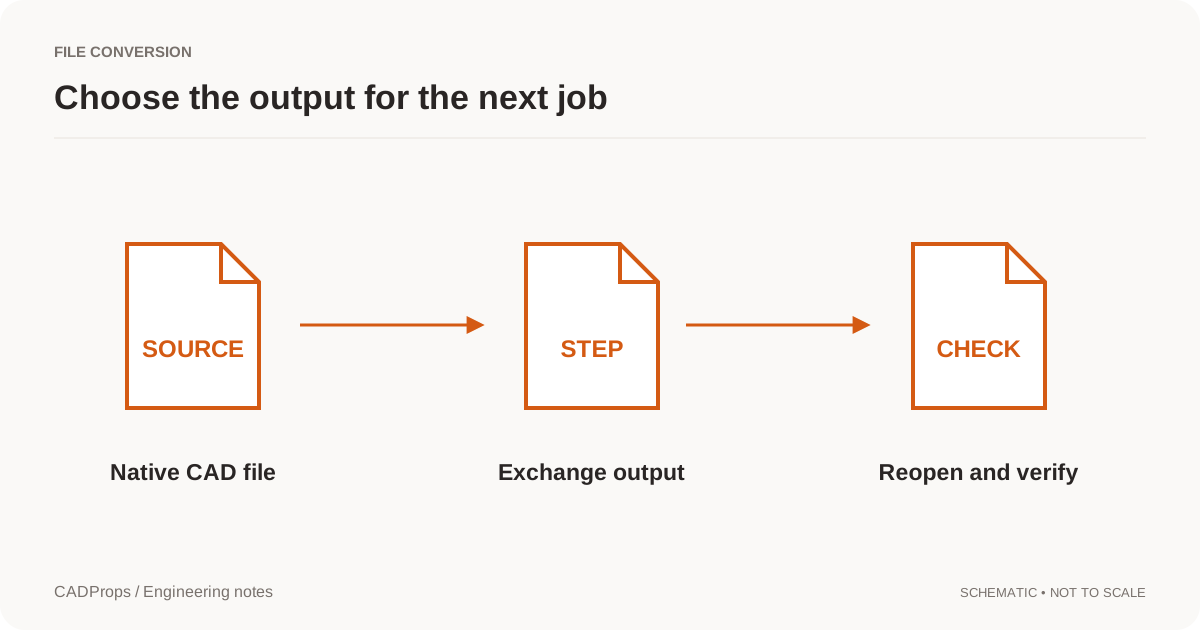
If the receiver only needs geometry exchange, ask the sender for a STEP file exported from the correct configuration. Agree the required units, assembly structure and any other data that must survive. STEP is not a way to preserve every editable native feature automatically, so keep the native original when future editing matters.
CADProps processes self-contained STEP/IGES geometry, supported static meshes and bounded ZIP packages. STEP pairs support solid differences; other 3D inputs support visual comparison. DWG provides 2D previews when the reader is installed. Native CAD formats and downloadable model conversion are not available. Open the STEP workspace.
A useful error message
Prefer “Source could not be identified; please confirm the authoring application and release” over “Invalid PRT.” If the application is known but the release is unsupported, say that. If referenced components are missing, list those instead. Precise error categories help a sender fix the right problem without making unnecessary exports.