Define which faces count
State whether the result includes internal cavities, hole walls and all bodies or only a selected subset. A total with no scope cannot be interpreted reliably for a process estimate.


Calculate surface area from STEP geometry, inspect individual parts and export the result in mm². Keep open surfaces and solid-volume requirements distinct.
 No account required
 Temporary workspaceCAD processing
Area is meaningful only with a defined set of faces and bodies. Internal surfaces, duplicated instances and the scope of a finish operation can all change which number is useful.
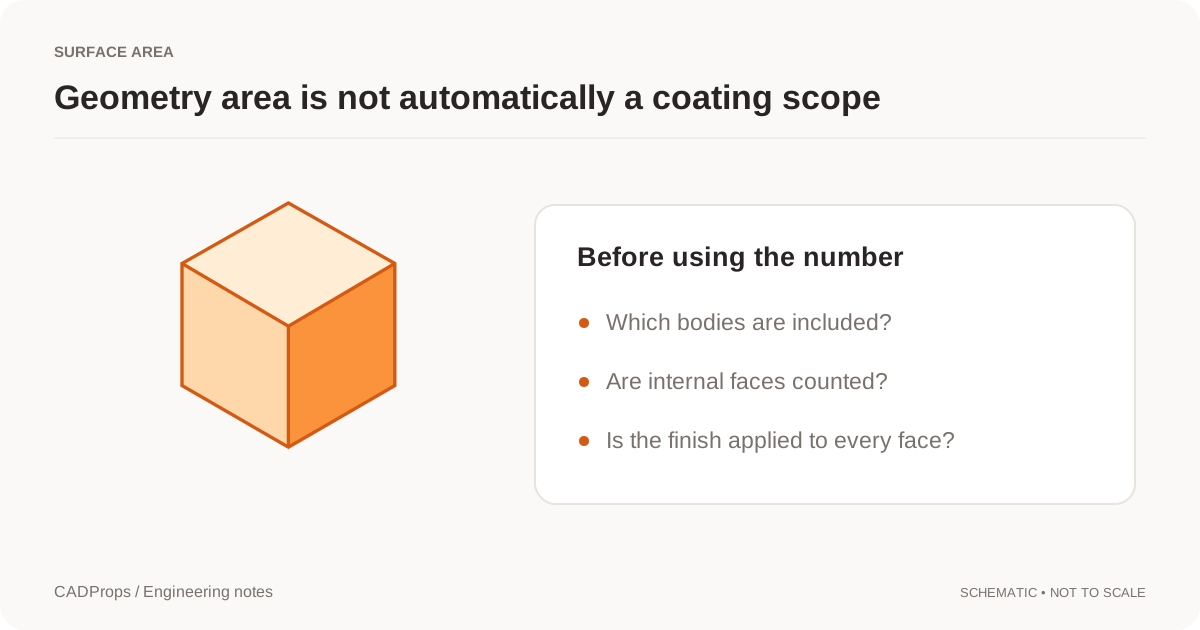
State whether the result includes internal cavities, hole walls and all bodies or only a selected subset. A total with no scope cannot be interpreted reliably for a process estimate.
Area from CAD surfaces and area from triangles can differ according to the approximation. Keep the method with the result. An attractive shaded image is not an accuracy statement.
Surface treatment may depend on masking, setup and process requirements not present in geometry. Export the measured scope and let the appropriate workflow apply its rules.
Generated STEP block: 20 × 30 × 40 mm, surface area 5,200 mm² and volume 24,000 mm³. At density 2.7 g/cm³ the calculated mass is 64.8 g. These values describe the synthetic block, not the default bearing sample.
Repository-generated samples are synthetic test models. Verify your own model's units and geometry before using results.
Hiding parts changes display only. Select an individual part to inspect its own properties.
No. Surface area includes represented internal and external faces and does not infer coating or manufacturing scope.
Selecting a file starts temporary server processing. Access is limited to your guest session. The entry shows configured retention and files can be deleted earlier.
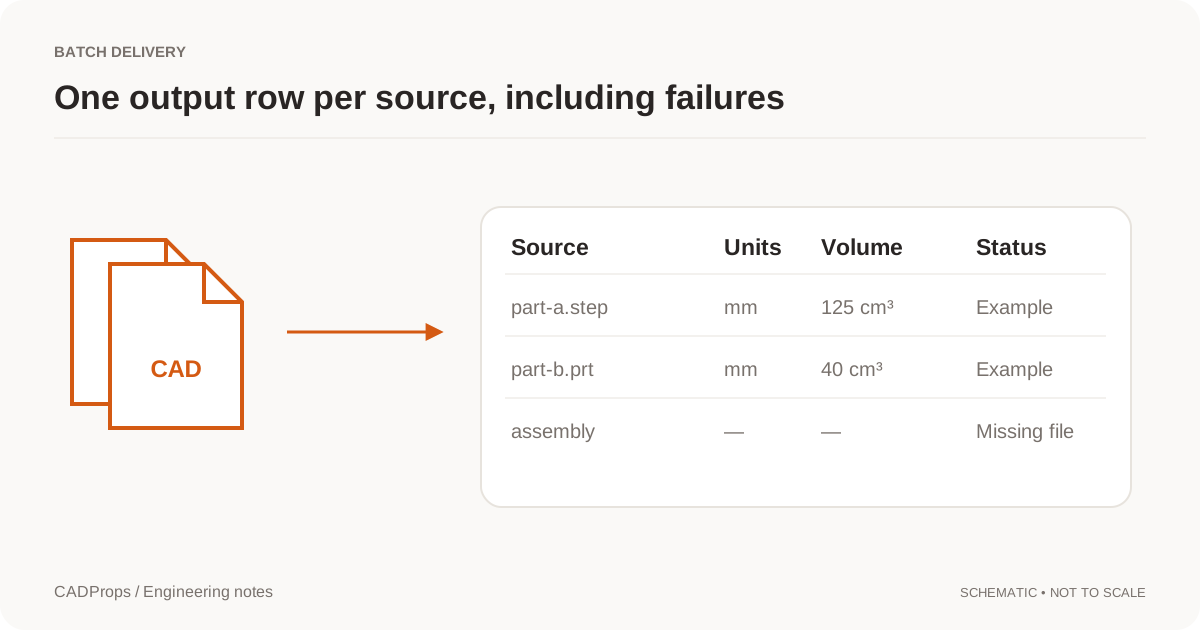 Batch & handoff
Design a useful batch report with one row per defined item, explicit units, material inputs and an exceptions list.
Read the guide →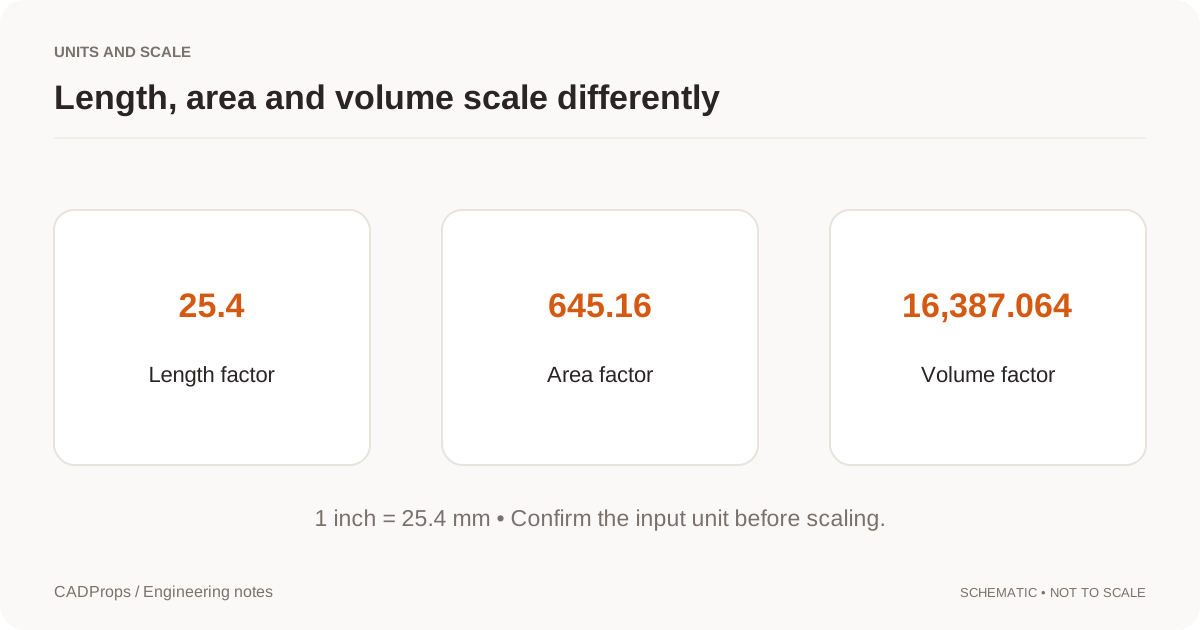 Measurement
Read a CAD model without confusing bounding-box dimensions, selected geometry measurements and drawing tolerances.
Read the guide →TroubleshootingCheck whether the file contains valid solids before changing density or export settings. Missing volume is not the same as an empty part.
Read the guide →